
Cartersville Open Records Inventory
Open access depends on the record, not merely on the name of an office. Bartow deed indexes and tax rolls are public, but an image, certified copy, or older volume may use a different channel. Court dockets can be open while sealed papers and protected identifiers remain closed. Modern birth records have eligibility rules. The table maps the main Cartersville record sets to the office and practical access route that control them.
| Record Set | Custodian | Online Index | Access |
|---|---|---|---|
| Deeds, liens, and plats | Bartow Superior Court Clerk | GSCCCA and Kofile | Public index; account or image fees may apply |
| Superior court and divorce files | Bartow Superior Court Clerk | Court e-access varies | Clerk request; sealed and restricted material excluded |
| Municipal cases | Cartersville Municipal Court | No complete stable portal verified | Call or request from the court |
| Property roll | Bartow Tax Assessor | qPublic | Free current parcel search; office fallback |
| Birth and death records | Georgia DPH or county vital office | No open modern name index | Eligibility rules; public redacted death-copy option |
| Jail and correctional records | Bartow Sheriff or Georgia DOC | Agency lookup tools | Current scope varies; confirm identity and disposition |
Georgia exemptions and separate confidentiality laws protect adoption and juvenile files, sealed or restricted criminal information, motor-vehicle personal data, protected voter fields, and parts of active investigations or victim records. A custodian should still release any segregable, nonexempt portion when redaction can protect the closed field. Public availability never turns a booking entry into proof of guilt or a tax mailing address into proof that an owner lives at the parcel.
Cartersville Deed Index Routes
The Bartow County Clerk states that real-estate indexes and images run from 1832 to the present, yet access is divided by era and task. Kofile’s historic index-book search covers deed indexes from 1837 through 1975 and plats from 1942 through 1989. Current and book-page work moves through GSCCCA. Certified electronic copies use the GSCCCA e-certification service. This split explains why one search screen may not show the whole recorded chain.
The historical form offers Deeds, Numerical Land Index, and Plats. A deed name search can choose grantor, the person transferring an interest, or grantee, the person receiving it. Surname, given name, initials, and spelling variants matter in handwritten books. The county’s Deed Room also supplies a free public computer lab at the courthouse during office hours. Staff can help with navigation and copies, but will not research or interpret a deed by phone.
The Bartow historic index source shows the form used to choose an index family and year range.
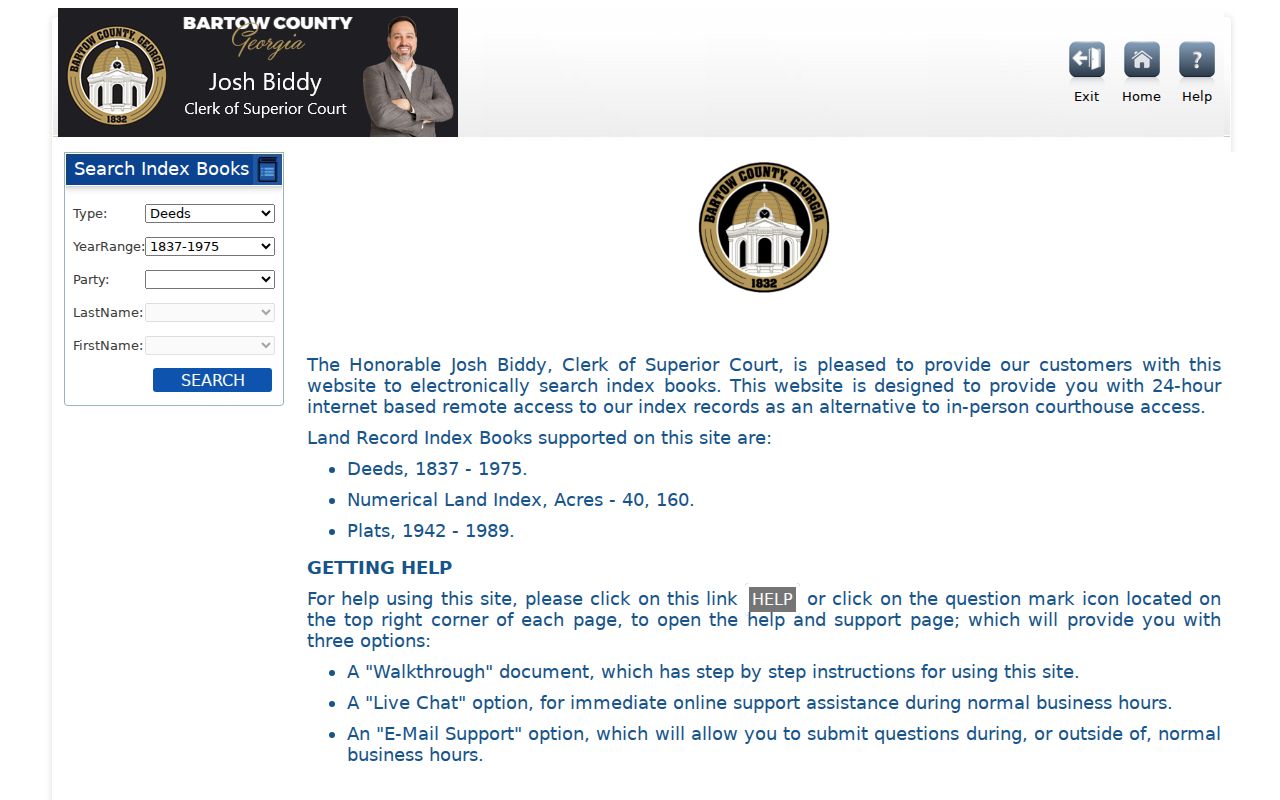
That screen is an index-book doorway, not the deed itself; carry its book and page citation into the image system or a clerk copy request.
GSCCCA does not offer one single catch-all box. The mode should match the fact already known. A party name helps locate grantor or grantee entries, while an exact book and page avoids a broad surname search. County selection keeps results in Bartow. Full detail or images can require an account or payment even though the search hub is public.
| Field or mode | Input | Best use |
|---|---|---|
| Real Estate Index | Party and related criteria | Find an instrument when no citation is known |
| County | Select Bartow | Limit the statewide index |
| Instrument type | Optional category | Narrow deeds, releases, and related records |
| Date range | Start and end dates | Reduce common-name matches |
| Book / page | Exact citation | Open the known recorded reference |
| Property Search | Subdivision, unit, block, lot | Search participating county property indexing |
Index versus image: an index summarizes how a document was recorded. The image is the scanned instrument. Neither is a certified copy until the clerk authenticates it.
Note: Online access does not promise that every image is free or that the first web year equals the earliest surviving record.
Cartersville Property Record Access
Bartow qPublic searches the assessor roll by owner name, location address, or parcel number. A parcel card can show the assessed owner, mailing and situs addresses, values, acreage, sales history, legal-description details, exemptions, and a map link. “Situs” means the physical property address. A separate mailing address can point to an absentee owner, but it remains a tax-notice address rather than proof of residence.
The Bartow Public Map supplies geographic context such as parcels, streets, addresses, administrative boundaries, imagery, fire stations, and schools where layers are enabled. GIS boundaries are informational, not a survey. For title evidence, take the parcel card’s book and page or transfer citation to the Clerk’s recorded deed. Land district, land lot, subdivision, lot, block, and plat references can be more durable than a street address.
Cartersville Court Record Copies
The Georgia court e-access page is a gateway to participating providers, not a complete statewide party-name database. Cartersville Municipal Court handles city ordinance and traffic matters. Bartow Magistrate, State, Superior, and Probate courts hold different case classes. Superior Court keeps felonies, divorces, title disputes, and general civil matters; Probate handles estates, guardianships, and marriage licensing.
A docket is the court’s event list. It may show case number, party names, court, filing date, case type, status, judge, events, and sometimes disposition. The docket does not ensure that document images are online. Ask the creating clerk for the actual file and give the court, case number, party names, approximate year, and exact paper sought. Request certification separately when formal authentication is needed. A missing web result does not prove that no case exists.
- Custodian
- The agency or office responsible for the record.
- Certified copy
- A copy authenticated by the issuing clerk or records office.
- Exemption
- A law permitting or requiring specific information to be withheld.
- Redaction
- The removal of protected details while the rest may be released.
Cartersville Vital Records Boundaries
Georgia DPH and county vital offices issue Georgia birth and death certificates from the statewide registration era beginning in 1919. Birth access requires a direct and tangible interest under O.C.G.A. §31-10-26. Eligible classes include the registrant and qualifying close relatives or legal representatives. A certified death copy also requires an eligible relationship or tangible interest, but Georgia permits any member of the public to order a plain-paper death record with the Social Security number redacted.
Birth and death certificates can be ordered online through the state ROVER service, by mail with the current record form, identification, and payment, or in person at the state office or any county vital-record office. The state lists common online processing at two to four weeks and mail response at eight to ten weeks, so the current DPH ordering instructions should control. Mailing requests go to the State Office of Vital Records in Atlanta. Walk-in payment and mail payment methods differ, and prepaid fees become nonrefundable after the search service is performed.
Custody changes with the event and year. DPH holds marriage records from 1952 through 1996. For other years, request the local certified marriage record from Bartow Probate Court. DPH can verify a divorce, but the decree and case file belong to Superior Court in the county where it was granted. Birth and death certificates cost $25 for the first certified copy and $5 for an additional copy in the same order; the researched state marriage search fee is $10, with $5 additional copies. Current forms and posted fees should control before payment.
Restricted does not mean nonexistent. Use the correct custodian and prove eligibility when required; do not seek sealed adoption or protected family records through workarounds.
Cartersville Public Records Desks
Cartersville is the Bartow County seat, so several county custodians work from the courthouse complex while city requests follow separate channels. Call the responsible desk when a portal fails or when certification is required. Office hours and locations can change, so confirm them before a visit.
Bartow Superior Court Clerk
135 W Cherokee Avenue, Cartersville, GA 30120
Monday-Friday, 8 a.m.-5 p.m.
Bartow Tax Assessor
135 W Cherokee Avenue, Suite 126, Cartersville, GA 30120
770-387-5090
Cartersville Municipal Court
City ordinance and traffic case records
770-607-6307
The Superior Court Clerk is both the recorder for land instruments and the clerk for Superior Court case files. The assessor is the right desk for ownership rolls and parcel data, while Municipal Court controls its own city-case records. Probate Court remains the custodian for estates, wills, guardianships, and local marriage records outside the DPH custody span.
Cartersville Records Request Channels
General city records requests go in writing to the City Clerk at orr@cityofcartersville.org, by hand or overnight delivery at 10 N Public Square, second floor, or by regular mail to P.O. Box 1390, Cartersville, GA 30120. Police records use a separate channel: cpdrr@cartersvillepolice.com, hand delivery at 195 Cassville Road, or the same city post-office box. Describe an existing report, permit, video, or file rather than asking the city to answer a question.
County law-enforcement records belong to the Bartow Sheriff request channel. Incident reports can be obtained from the office during business hours. The Sheriff is at 104 Zena Drive and lists 770-382-5050 for its main and jail line. City Police and the county Sheriff are different custodians, even when the mailing address says Cartersville. A postal address outside city limits may shift permits, police, and court records to Bartow County.
Note: Give an incident number, date, place, and named parties when known so the correct agency can find an existing police record.
Cartersville Open Records Fees
Georgia permits reasonable search, retrieval, redaction, and production costs based on the lowest-paid qualified employee. The first quarter-hour of administrative work is free. Ordinary copies are generally capped at 25 cents per page unless another law sets a fee. Inspection can be requested instead of purchased copies, though labor may still apply when staff must locate or redact records.
Cartersville posts a lower local rate of 10 cents for black-and-white letter or legal pages and 25 cents for color. Its schedule also lists 50 cents for an 11-by-17 black-and-white page, 75 cents for color, $8 for a thumb drive, $1 for a CD, and $10 for a body-camera, drone, or dash-camera video DVD. Basic police or incident reports, emailed reports, and PDF delivery are stated as free. Those city prices do not govern county, court, or state custodians.
Can a requester set a cost limit? Yes. Ask for an estimate when charges may exceed a stated ceiling, and narrow the request before costly work begins. A precise date range and document type often matter more than a long explanation.
Cartersville Custody Record Limits
Bartow jail data covers county custody, while the Georgia DOC offender query covers the state correctional population. The jail channel can search name, subject number, booking number, custody status, booking dates, and detention facility where offered. GDC permits name, ID, physical-description, and case-number searches. Its own tip is to try the first four letters of a surname and select all offenders rather than active records alone.
The GBI registry source provides access to the state registry and its use warnings.
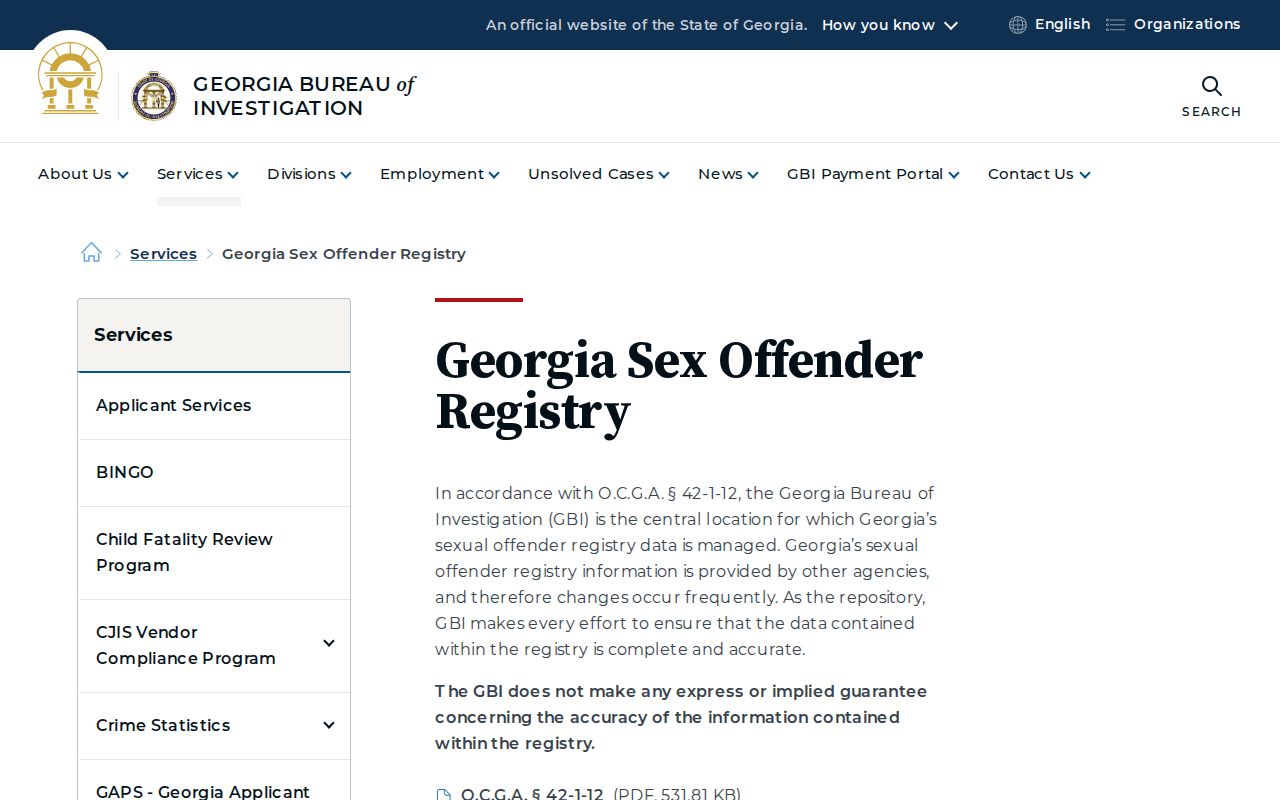
The registry is a specialized statutory record, not a general court disposition search. Confirm identity, read official cautions, and never use registry information to threaten or harass a person.
Historic Cartersville Records Offline
Older public records often outlive the portal that first comes to mind. Georgia Archives research help points researchers toward county microfilm, historic indexes, and selected online collections.
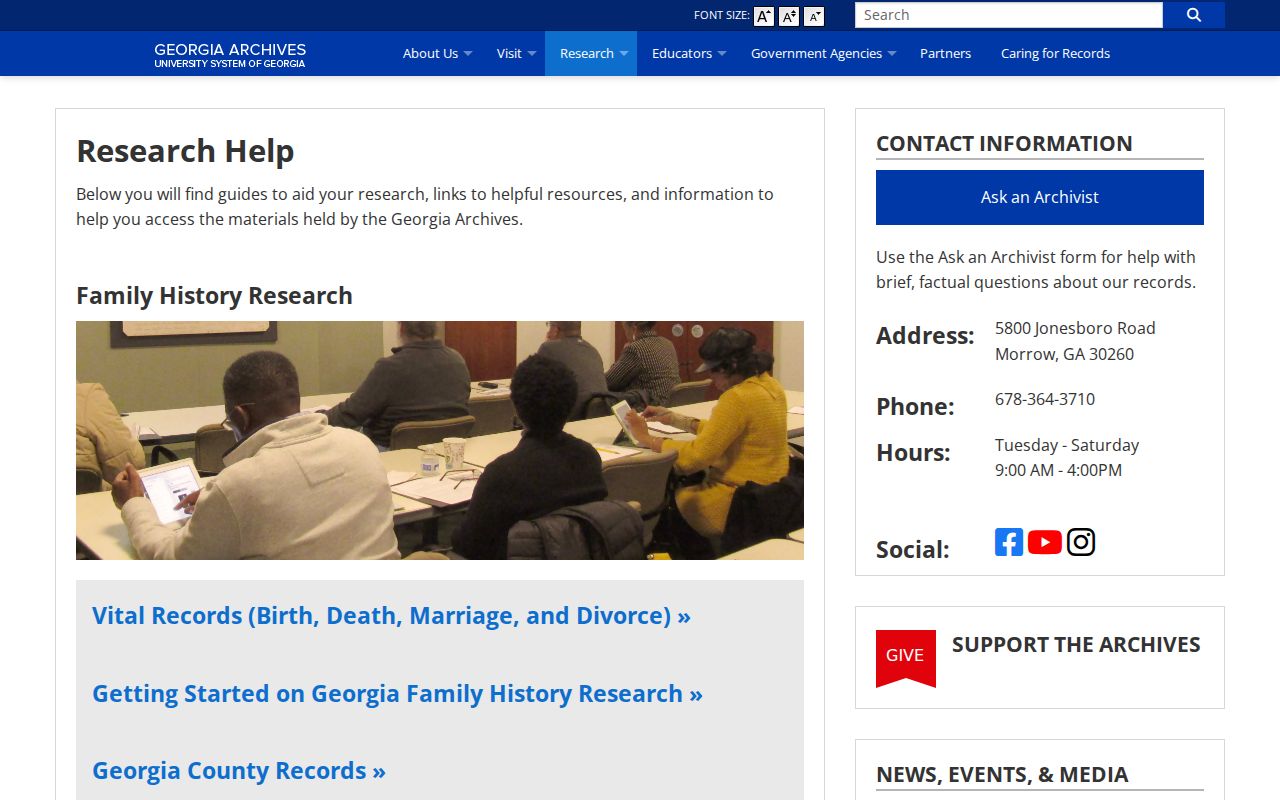
Its holdings can include property, estate, marriage, tax, Superior Court, and Probate or former Court of Ordinary minutes, though access varies by series. Statewide marriage microfiche indexes cover 1964-1971 and 1973-1999; divorce indexes cover 1965-1971 and 1973-1999. Those indexes do not replace the county’s actual decree or case file.
The Cartersville Library Special Collections source describes room-use material, local newspaper microfilm, a microfilm reader, and scanning help.
The library route is useful when an online index ends, but a library image or newspaper notice should still be tied back to the official clerk, probate, or vital record when formal proof is needed.
Cartersville Records Response Timing
The Georgia Open Records Act, O.C.G.A. §§50-18-70 through 50-18-77, normally requires a response within three business days during normal hours. That period is not a promise that all records will be produced in three days. If production cannot occur then, the agency should identify responsive material and provide a timetable and cost estimate. The Act also does not require an agency to create a new report, summary, or compilation that does not already exist.
When information is withheld, request the statutory basis in writing and ask for segregable nonexempt portions. The Georgia Attorney General’s Open Government Mediation Program is an enforcement and mediation resource. Keeping the original request, delivery proof, estimate, and agency response creates a clear record if the scope, fee, or exemption must be reviewed.
Request Cartersville Public Records
A focused request under the Georgia Open Records Act should seek the smallest existing record set that answers the need. Name the office, record type, date range, subject, case or incident number, and desired format. Ask to inspect when that is more useful than buying copies, and state a cost ceiling if search or redaction work could grow.
- Identify the city, county, court, or state custodian that created and keeps the record.
- Check the official index and save exact book-page, parcel, docket, or incident citations.
- Submit the office’s form, email, mail, or in-person request with a narrow description and preferred electronic format.
- Review the timetable and estimate. Narrow the dates or document types if the expected cost is too high.
- If material is withheld, request the cited exemption and release of all portions that can be separated and redacted.
Lawful use. Cartersville records may support family research, civic review, property questions, and scam checks. Public access is never permission to stalk, threaten, harass, or expose a protected address.